Here’s a piece of luck no poet should ever take for granted: the gift of knowing ordinary civilians—non-poets—who’ve somehow learned to welcome poems into their lives.
Welcoming a poem, for me, means sitting with it—or walking around with it—and reading it more than once, maybe including out loud. Ultimately, though, I give credit to anyone who doesn’t immediately bat away an incoming poem as if a horsefly had come at them.
To announce that you don’t like or read poems is like saying you hate math—widely acceptable, very nearly a default position. A non-poet open to poems has usually had the luck of a particularly good teacher, or a family member or good friend. In some way, somewhere, they’ve been handed poems by someone who didn’t demand analysis but instead asked, “Where does this take you?”
Right now, I’m wanting to give credit to two people in particular, not at all the only ones, but on my mind.
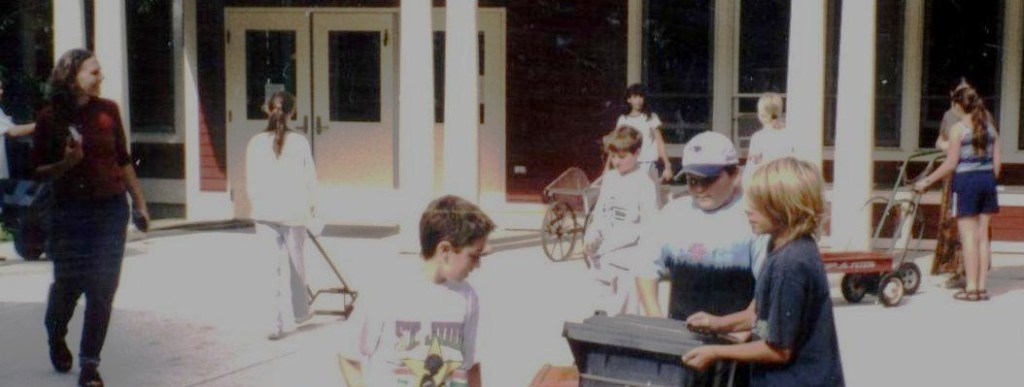
When I taught young adolescents at Touchstone Community School, I often partnered with Kate Keller. We planned new interdisciplinary approaches, and then worked together with each other and the kids to explore the world. Often we considered questions the kids themselves had identified as urgent, to which we brought Kate’s gift for opening up complicated topics in hands-on ways. If you search Kate’s name in my teaching blog, ayeartothinkitover.com, you’ll find some of the most transformative adventures of my teaching life.
Through it all, Kate modeled openness and thoughtfulness. Always, observing her, teaching with her, I learned new ways of supporting kids, both cheering and challenging them. (Especially, in fact, for teaching math.)
At school I was a little guarded about my poetry life, but I often brought new poems to Kate. Poems handed to her were always received with respect, and handed back with encouragement and wise questions.
Another way to say all this: Kate Keller helped me keep two good and useful fires alive: the fire of my teaching, such an important and rewarding thing to do, but such a hard thing to feel confident doing—a hard thing, in various dimensions, to sustain. And the fire of my poetry, ditto on every count.
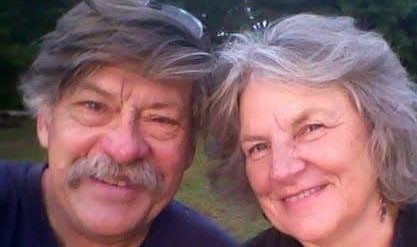
I’ve also been lucky to have a life partner who values poetry. A physics major, photographer, French horn player, political activist, and eventually a computer magician, Alex Brown courted me, when we were still students, by reading me the poems of Ezra Pound. I can’t remember when I first showed him mine, but all the years since, whenever I’ve read poems publicly, he’s imagined talent scouts waiting to discover me and bring me that fame and fortune he’s convinced I deserve. (Only a non-poet could expect this.)
A specific memory: years ago, at a gathering of geography graduate students, Alex introduced me as a poet. “Oh!!!!” a small group of international students chorused. “A poet!” Alex’s introduction let me carry that away in my heart.
Lately, in our shared retirement, which has included resettling an old family place in Maine, we’ve discovered a wonderful poetry reading series in Winthrop, several towns away. Alex likes those twisty, hilly roads with their long views, and while I drive, he often reads my poems aloud.
I learn a lot by listening to his readings, that deep Russian voice, its expressiveness. Every poem in Stitching, my latest book, Alex read aloud for me, often through multiple versions. Listening to his readings helped me understand what each poem was carrying, or trying to carry; what could be parked by the wayside, what might want to climb on for the ride.
On longer drives, reading whole sections, poem by poem, he helped me sense how they could or couldn’t pull together. Without the voice Alex gave to it, Stitching would be a very different book.
So: tremendous thanks to many generous non-poet friends and family members not named here (yet.) And particularly to Kate Keller and Alex Brown, through so many years.
This is not exactly a recipe, but it works for both non-poets and poets: If someone hands you a poem, say thank you even before you read it. Read it in ways that let you pass through all the windows and doors of the poem, in and out and in once more, like a swallow.
Then thank the poet again. You will be contributing, in some small way, to the survival of our species.


Leave a Reply