1
Some time in the late 70s, my father and his wife were visiting us in upstate New York, and we had taken them to see a small lake nearby. Walking along the shore, my father suddenly began reciting poetry, lines (I think, now) from “Thanatopsis” by William Cullen Bryant:
       To him who in the love of Nature holds
       Communion with her visible forms, she speaks
       A various language; for his gayer hours
       She has a voice of gladness, and a smile...
Bryant goes on to explore what nature can mean to someone fearing or approaching death. The rest is here: https://www.poetryfoundation.org/poems/50465/thanatopsis
When he was a kid, my father had memorized poem after poem, practicing while he helped with the milking. He was told to, for school, and discovered that he could.
Years later, as we walked by the lake, my small daughter holding my hand, my father told me that those long stretches of verse, stashed away in his head, had helped him as a soldier in Europe.

And finally, years after that day when the beauty of the lake opened up my father’s memory, I learned more about his experience as a prisoner of war, and about its last chapter, a death march.
Starving, a shadow of himself, held together by a few scavenged potatoes and a thread of poetry, my father had just barely held on, come through.
Now I think: courage, woven from poetry.
2
Both my parents wrote poetry (in addition to memorizing it). I began writing poems myself when I was still very young. I thought it was an ordinary, normal thing to do.
Eventually, though, as an adult, I sensed territories in my experience that I could not approach, in poetry, or any other way. Barbed wire, blank walls with no doors.
Adelle Leiblein, wonderful poet, wonderful friend, told me, “Maybe if you wrote in other people’s voices, you could get past those barriers.” Not for the first or last time, she was right: in persona, in various voices not my own, I wrote poem after poem.
Here’s an interesting thing: in many of those poems, adults worry about damaging the children they love. I don’t understand all the layers of resonance, but often I know I’m both the child and the adult.
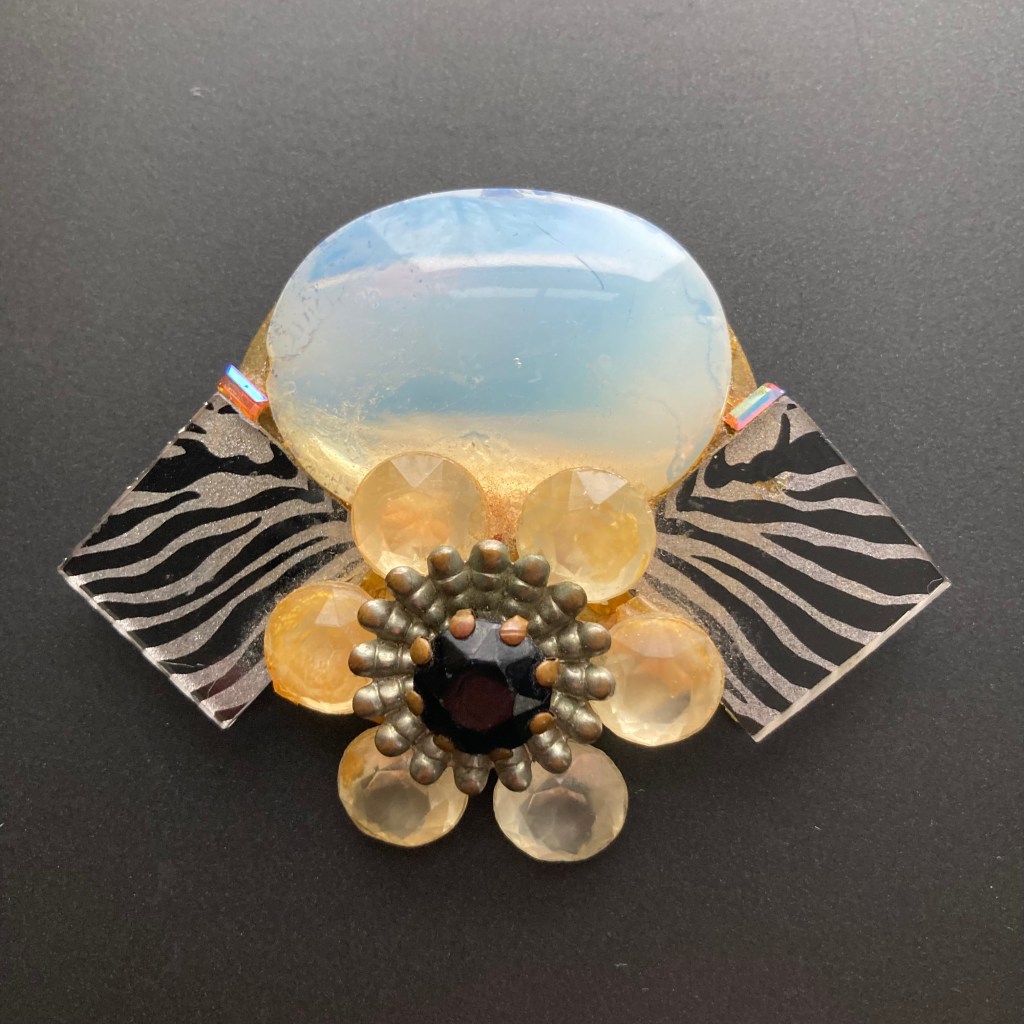
Adelle died a few months ago. When I heard, I went searching and found this collage pin she made for me. Off and on, I’ve been wearing it with my ordinary at-home clothes. (After all, why not?) In this section of my website, you can find an Adelle poem, from one of the Every Other Thursday anthologies she did so much to bring into being.
3
In the last decade of my mother’s life, I discovered just how much poetry she had written (and hauled around, every time she moved to be near another daughter). She let me help her sort out a large boxful, and we gathered together the scattered multiple versions of many poems. I can see them still, piles of pages all over the furniture in several rooms.
Later, Jeannie chose which versions, and which poems, felt truest to her, sometimes writing new versions closer to what she wanted.
In one poem, Jeannie had written in persona, as a mouse, speaking about a cat. Bitter resignation, along with determination to have her say. I assumed the poem had risen out of anger at my father, in the years when their marriage was falling apart. Only edging toward courage enough to admit that anger, the poem nevertheless stubbornly held its place in the collection.
Jeannie’s sorting and my retyping took a long time, interrupted by my father’s death. Dementia began to fog and scramble my mother’s thinking, and I feared, at times, that our project might be stuck. But again and again she lifted into her most lucid self, whenever we worked together on what we began to see as the manuscript for a book.
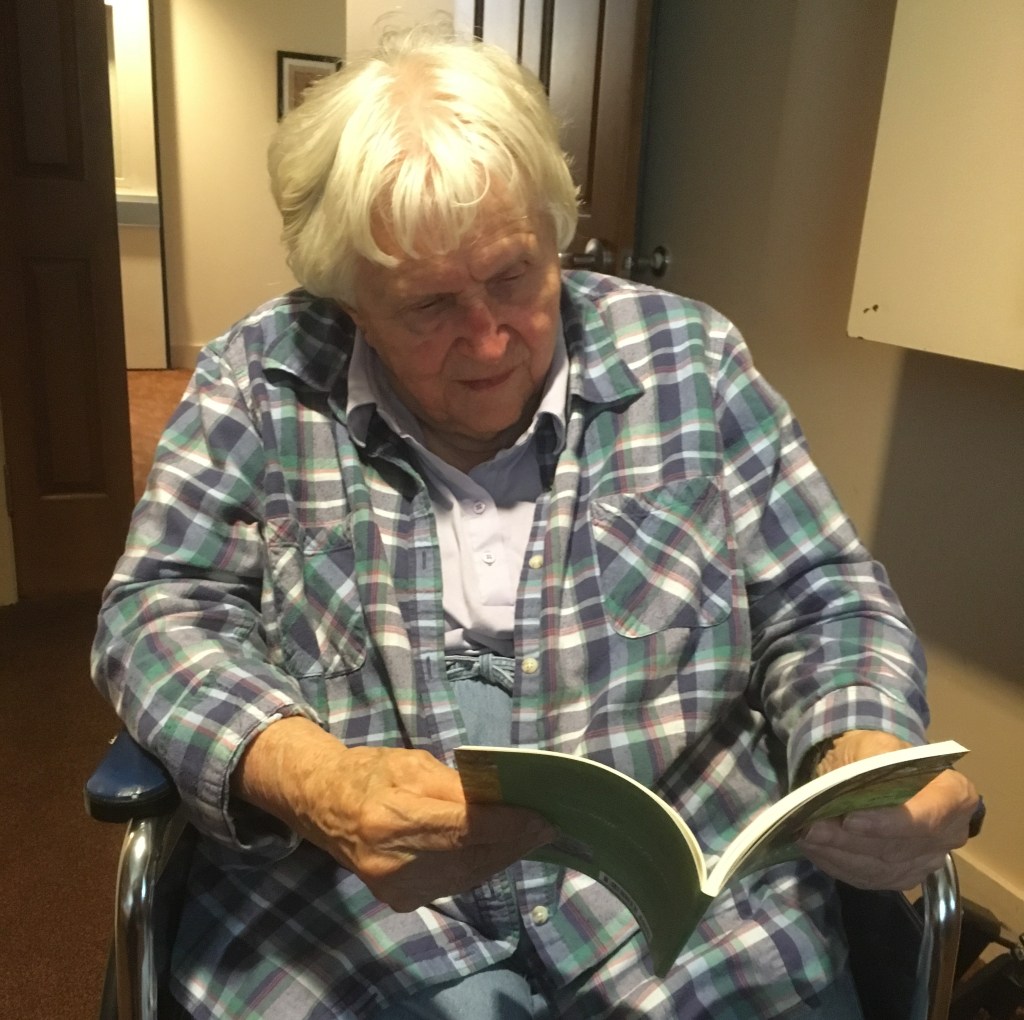
We published, with Sarah Bennett’s help, just in time for my mother still to know the book as her own. Like nesting wooden dolls of courage within courage within courage: not the mouse so much as the poem itself / within the sequence / within the book / within her decision to let it be in the world.
4
Now I’m letting myself jump back. According to all reports, I was a reasonably cheerful child, full of songs and pretend games, often reading but always glad to be outdoors. Something about adolescence, its hormonal roller coaster, but also its ability to see wider, to see and feel overwhelmed by injustice, racism, hypocrisy; something about watching my parents’ marriage crumble; something about losing a close friend to a terrible accident; who knows what else—somehow my own momentum faltered, and I became a flight that could easily go into a stall.
A story with thousands of variations, familiar, I’m guessing, to many of us.
My mother’s mother, the person I call Gram—also concerned, also worrying—sent me a greeting card poem, which I tucked in the frame of a mirror where I would see it every day. It’s a poem by Victor Herbert, for which there are many translations from the original French. This is the one still in my heart:
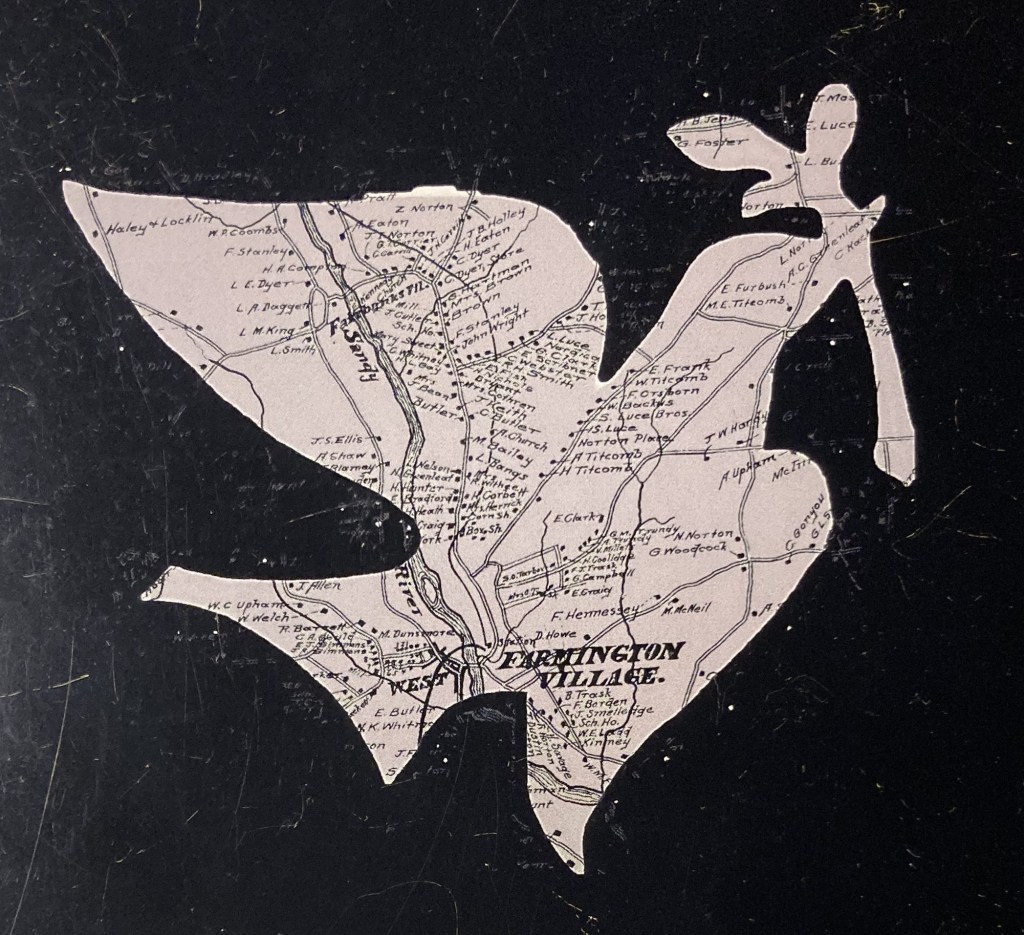
Be like the bird,
who, halting in her flight
awhile on boughs too slight,
feels them give way
beneath her and yet sings,
knowing she hath wings.
Do we all have wings? Do we have them all the time? Although I can’t seem to subscribe to certainties, I can feel how time keeps arriving for us, a wind under our wings.
For me, one way or another, the courage for stitch by stitch, breath by breath, remains deeply braided with poetry.
 Polly Brown / Poet
Leave a comment